Hawaii's Mochiko Chicken (Plate Lunch Style)
Disclosure: Some of the links in this post are affiliate links. This means if you click on the link and purchase an item, Third Culture Taste will earn a commission at no extra cost to you. See terms and conditions for details.
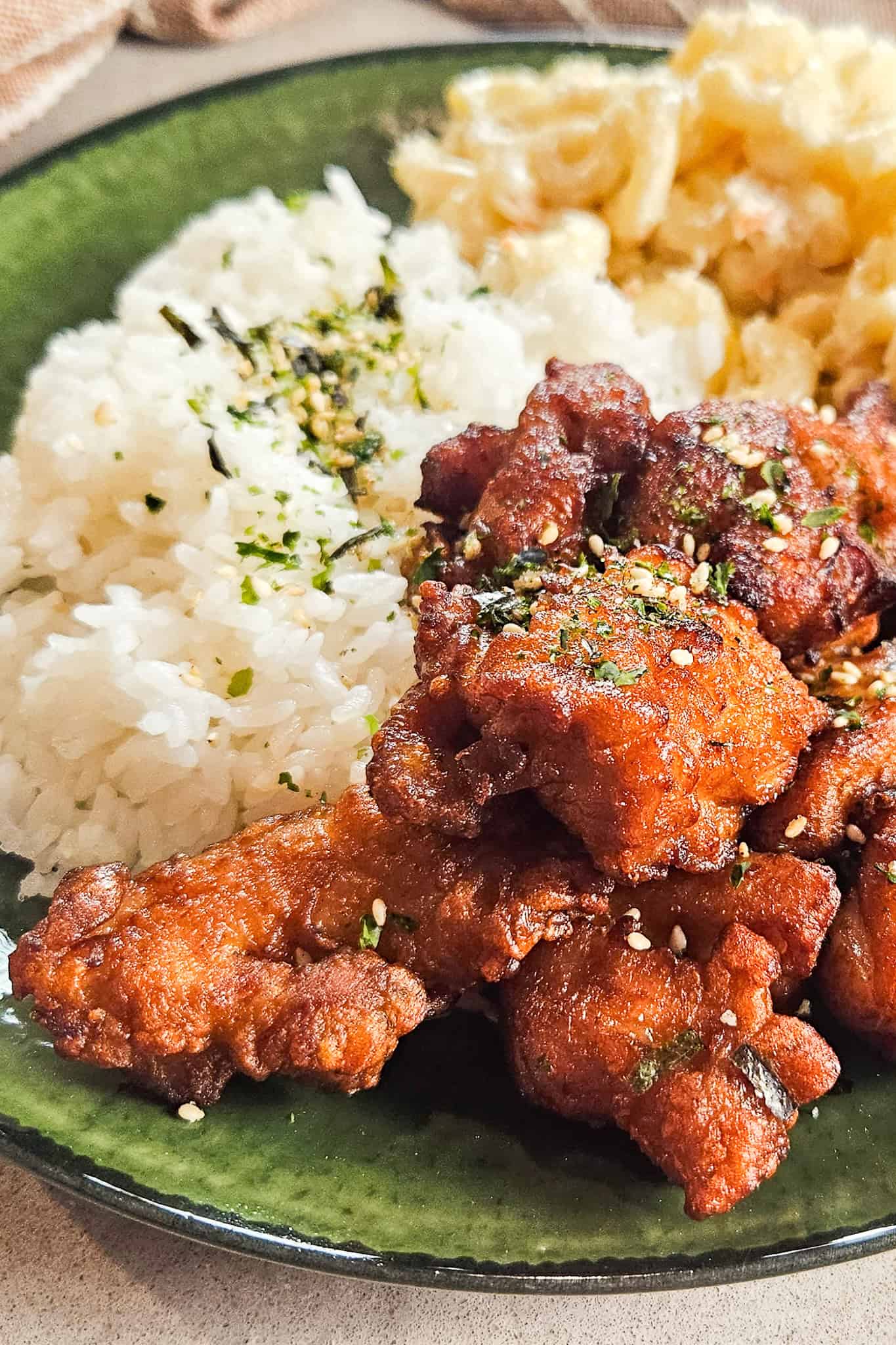
Mochiko chicken is often overlooked when meat jun or garlic chicken is on the menu. But this one is a sleeper hit that hits all the right notes in your taste buds. It gives you a flavor packed punch of garlic, ginger, sweet, salt and umami packaged in unique crispy coating. Sounds like marinated fried chicken, but trust me... it's more than that!
Jump to:
- Why You'll Love Mochiko Chicken
- Mochiko Flour vs. Glutinous Rice Flour
- How To Find The Right Mochiko Flour
- Potato Starch Substitute
- Frying Tips
- Adding Extra Starch Before Frying
- Preview Steps: How to Make Mochiko Chicken
- How to Serve Mochiko Chicken
- FAQ
- Hawaii Local-Style Mochiko Chicken Recipe (Super Crispy)
- Have You Tried This Recipe?
"Local" food in Hawaii is a unique fusion cuisine that came from generations of intercultural mixing among Asian, Latin American, Polynesian, European, and contemporary American communities. As a teenager in Hawaii, I would drive to Liliha Drive Inn in Kalihi just to get a plate of their overflowing mochiko chicken. Mochiko chicken specifically was born from the Japanese diaspora in Hawaii and refined through years of local-style cooking.
Why You'll Love Mochiko Chicken
Mochiko chicken is just built different. It's got this light outer crust, but inside is a tender and moist marinated chicken. The fluffy, crunchy texture is uniquely made from half mochiko flour and half potato starch. The flavors are so strong that you don't need a sauce, and you can eat it with plain white rice. To really zhuzh it up, you can sprinkle some furikake on it to amp up the umami.
Mochiko Flour vs. Glutinous Rice Flour
The most important ingredient in this recipe is the mochiko flour. This type of flour is different from regular glutinous rice flour, which could come from different varieties of rice. Mochiko is a rice variety itself. Its full name is mochigome (glutinous sweet rice), and it is a short-grain, dry-milled flour.
Why is it different? For starters, non-mochiko glutinous rice flour is wet-milled (a.k.a. soaked) and it could contain medium-grain to long-grain varieties. You can see a major difference when making something like ube butter mochi, where mochiko will yield a denser, chewier crumb. But other glutinous rice flours make it fluffier and almost cake-like, which is not the texture we want.
In short, you can't blindly substitute mochiko flour with just any glutinous rice flour. Conversely, you couldn't just use mochiko flour to make Thai steamed rice cakes like khanom chan because it will result in a heavy, gummy texture. I guess this is why it's called mochiko chicken and not glutinous rice chicken!
How To Find The Right Mochiko Flour
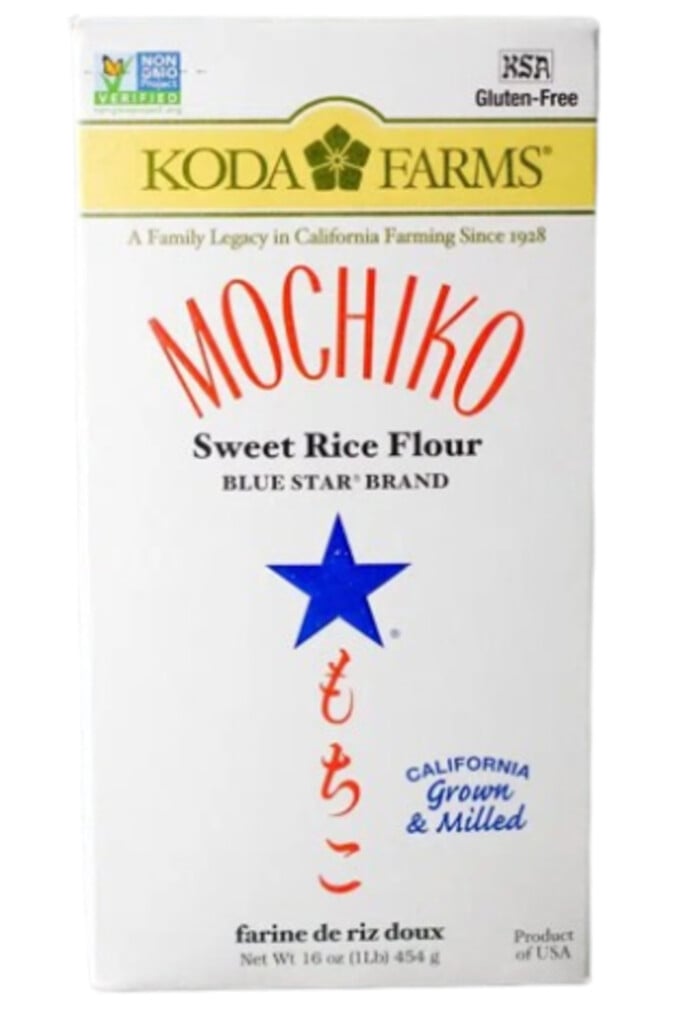
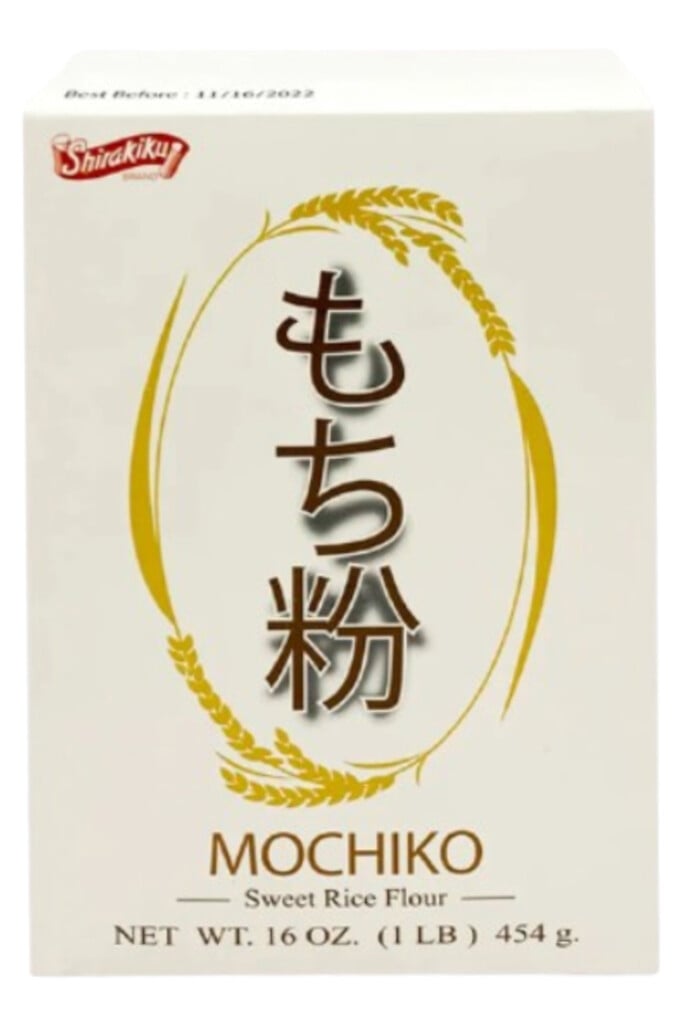
Just to get this out of the way, mochiko is actually two words in Japanese. Mochi comes from mochigome and ko means flour. So when I'm saying mochiko flour, I'm actually saying "mochi flour flour." We're lost in translation!
Koda Farms, an American brand, is the easiest to find. If your big grocery store has an entire Asian food aisle, they will most likely stock Koda Farms Mochiko. Another brand to look for is Shirakiku, which you can find in specialty Asian stores or online.
As far as I know, almost all of the brands that make mochigome or mochiko (other than Koda Farms) are Japanese. When you are visiting an Asian store, go to the flour aisle and look for the characters もち粉 in Japanese writing on the box or bag.
Potato Starch Substitute
You can replace the potato starch with cornstarch or all-purpose flour. These ingredients add to the crispy factor, just like potato starch. All-purpose flour will absorb the most moisture, so it will get soggy fast. This just means when you use flour to make mochiko chicken, you should eat it right away!
Frying Tips
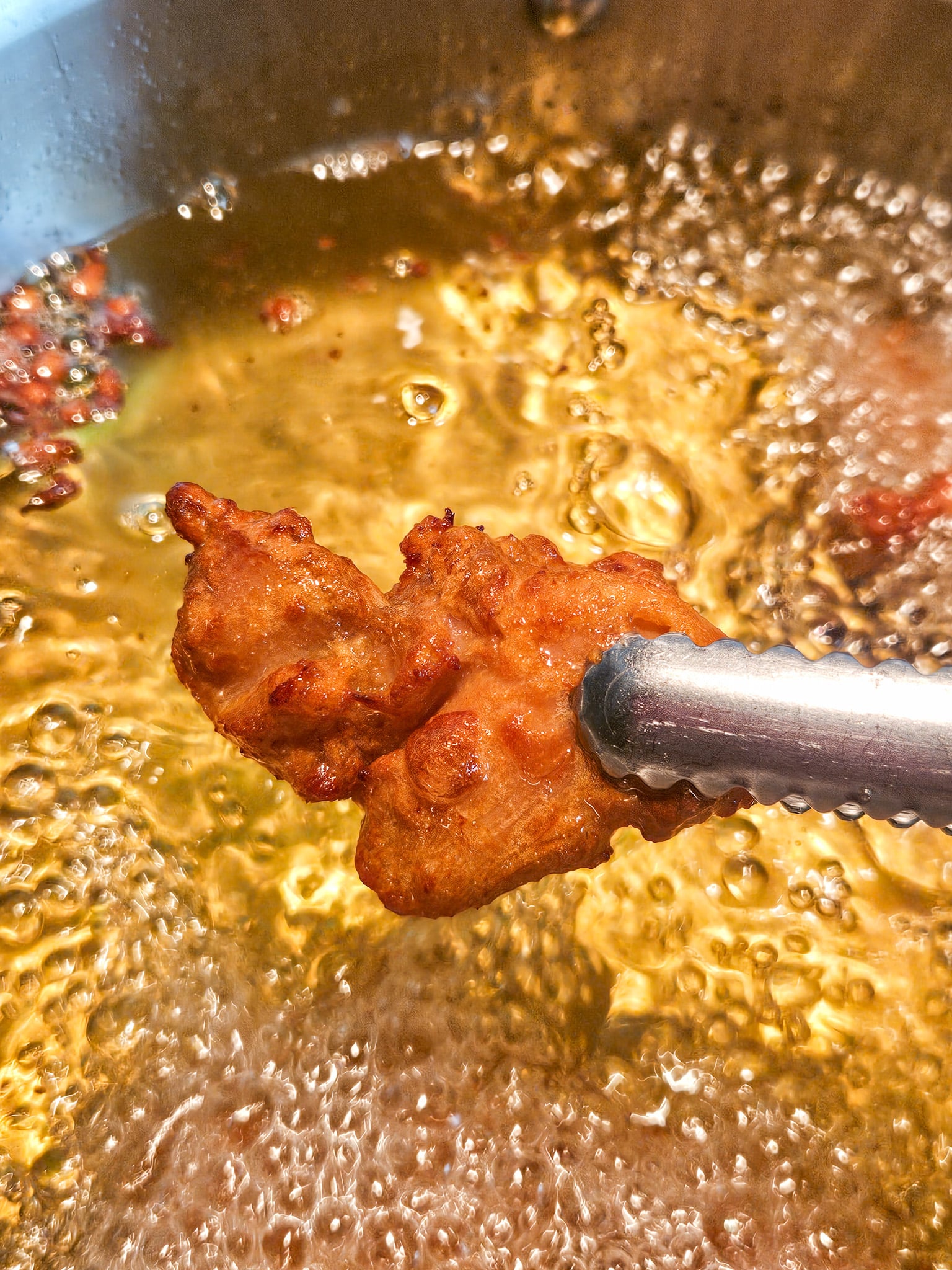
- Take the marinated chicken out of the fridge 20 minutes before frying to get it closer to room temperature. Taking the chill off the chicken ensures the oil temperature doesn't drastically drop and the chicken cooks evenly.
- Only cook a few pieces of the chicken at a time; don't overload the frying pot. The first reason for this tip is safety to keep the pot from splashing hot oil everywhere - you don't want to burn your stovetop or yourself or your house(!). The second reason is the same as the first tip, adding too many cool pieces of chicken in the oil can drastically change the oil temperature leading to uneven cooking.
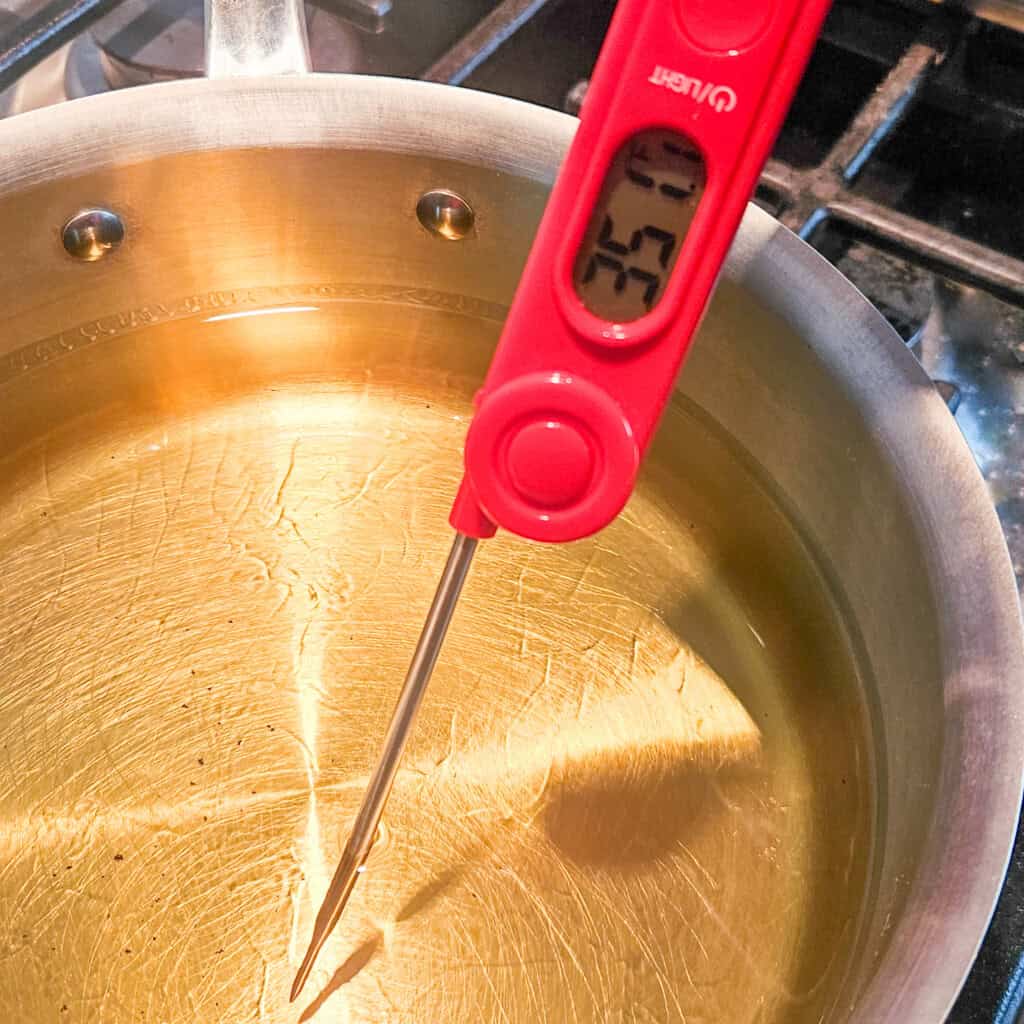
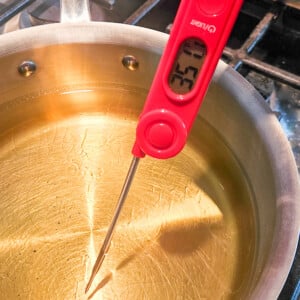
- Make sure your food thermometer reads around 350°F (175°C) before frying the chicken. Lower temperature forces the chicken to absorb more oil and makes the chicken greasy while higher temperatures cooks the exterior too fast, leaving the inside raw.
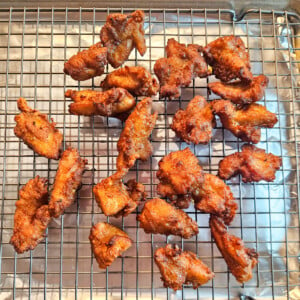
- After frying, place the fried chicken on an elevated wire cooling rack to drain. Try to avoid using paper towels, which trap steam and make the mochiko chicken turn soggy in minutes.
Adding Extra Starch Before Frying
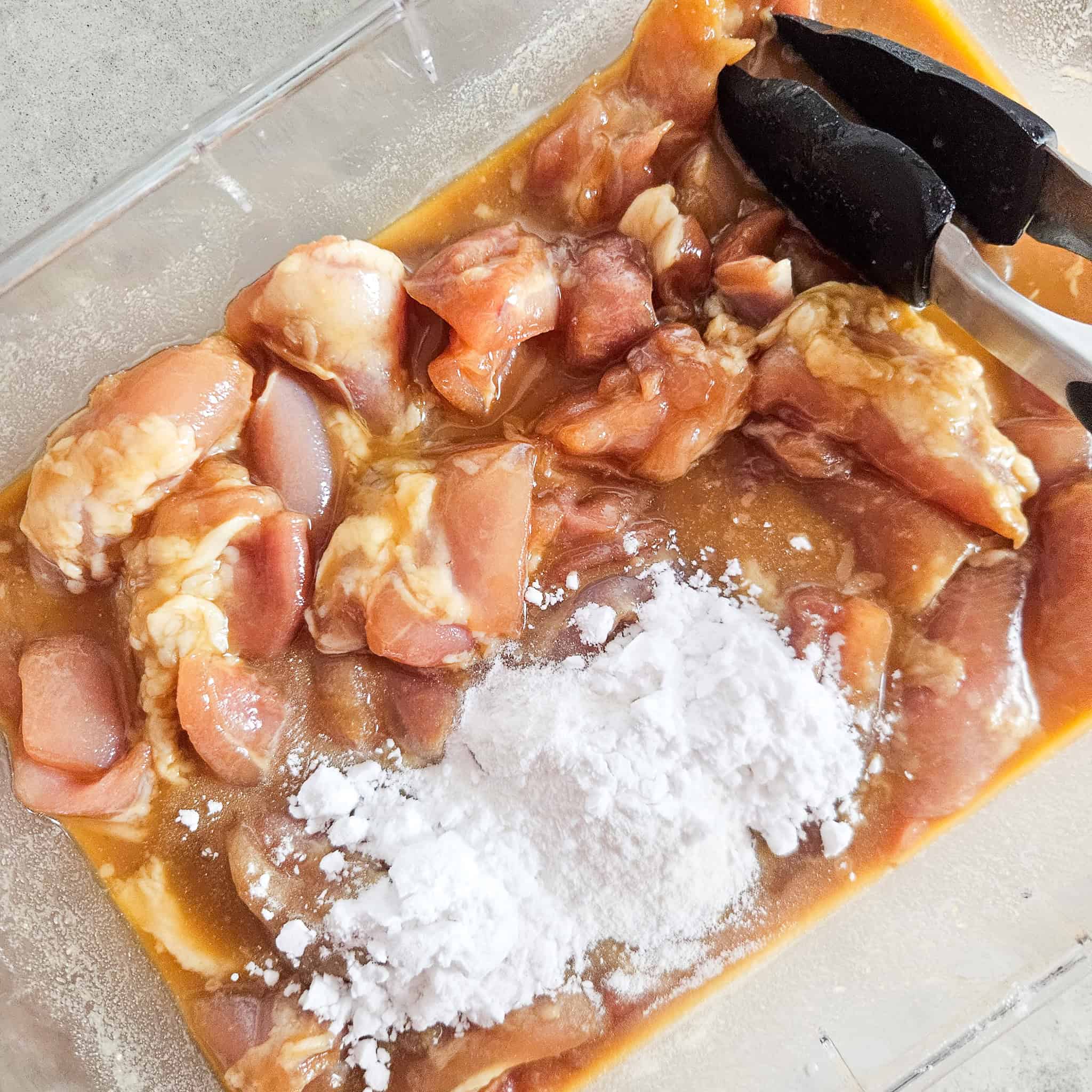
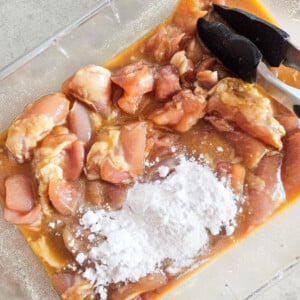
You'll notice that in my recipe, there's an extra step to add 2 tablespoons of potato starch and mochiko into the marinated chicken just before frying. I do this because introducing fresh, dry starches right before the chicken meets the oil adds dry minuscule granules that instantly blister and pop on the outer layer resulting in more bottom-line crispiness.
After 4-6 hours, the marinade has already hydrated the potato starch and mochiko, so the chicken has absorbed some of the liquid. When you cook the marinated chicken as it is without the extra starch, sometimes the batter ends up being like a fried pancake. It is still crispy, but it's a doughy kind of crispy instead of light batter kind of crispy. Think of it as the crunch difference between a funnel cake and a churro.
Preview Steps: How to Make Mochiko Chicken
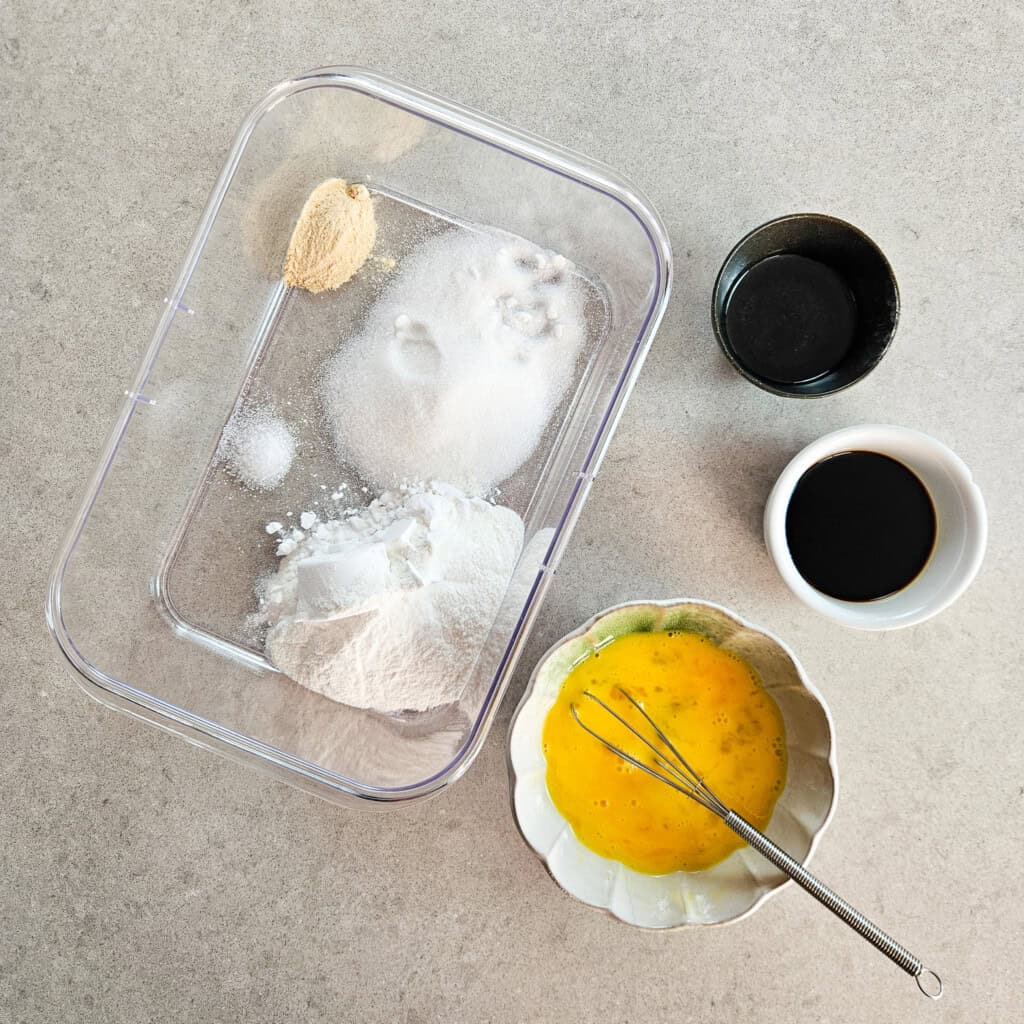
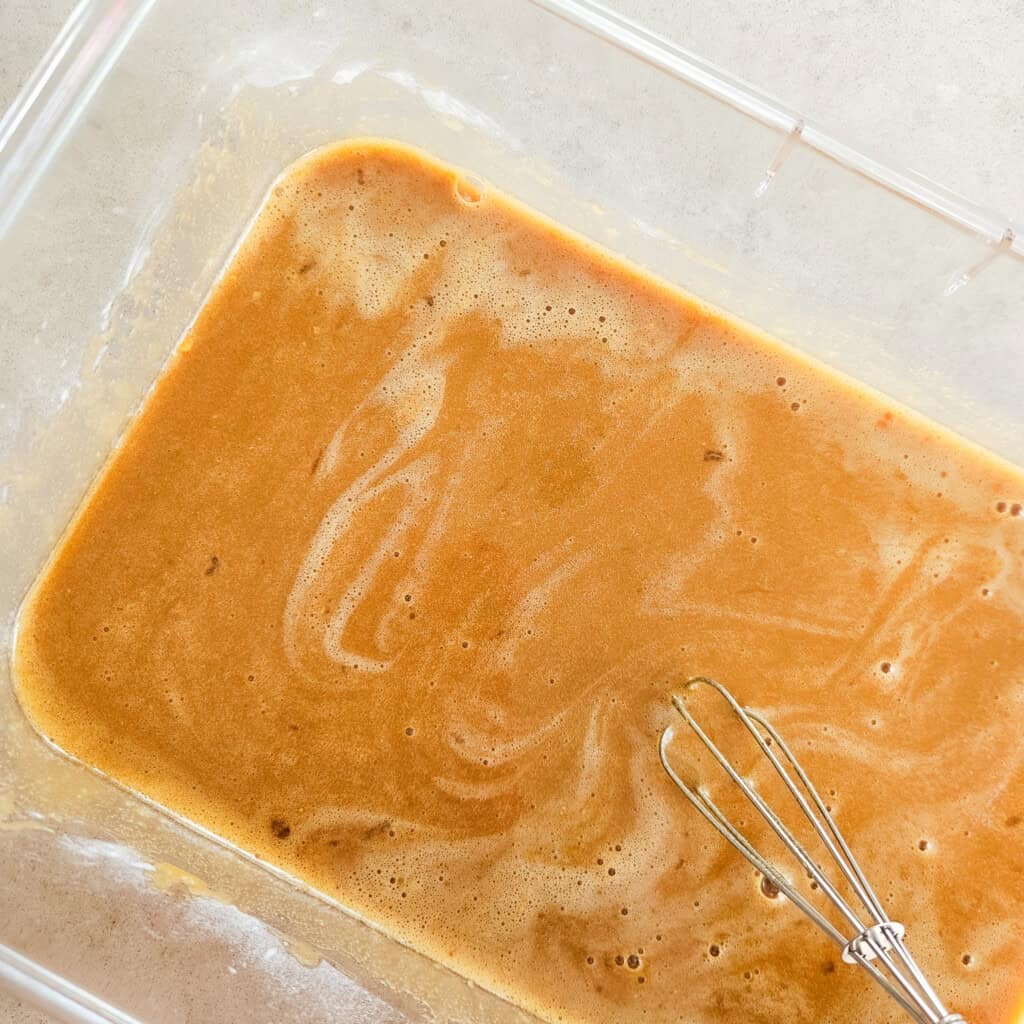
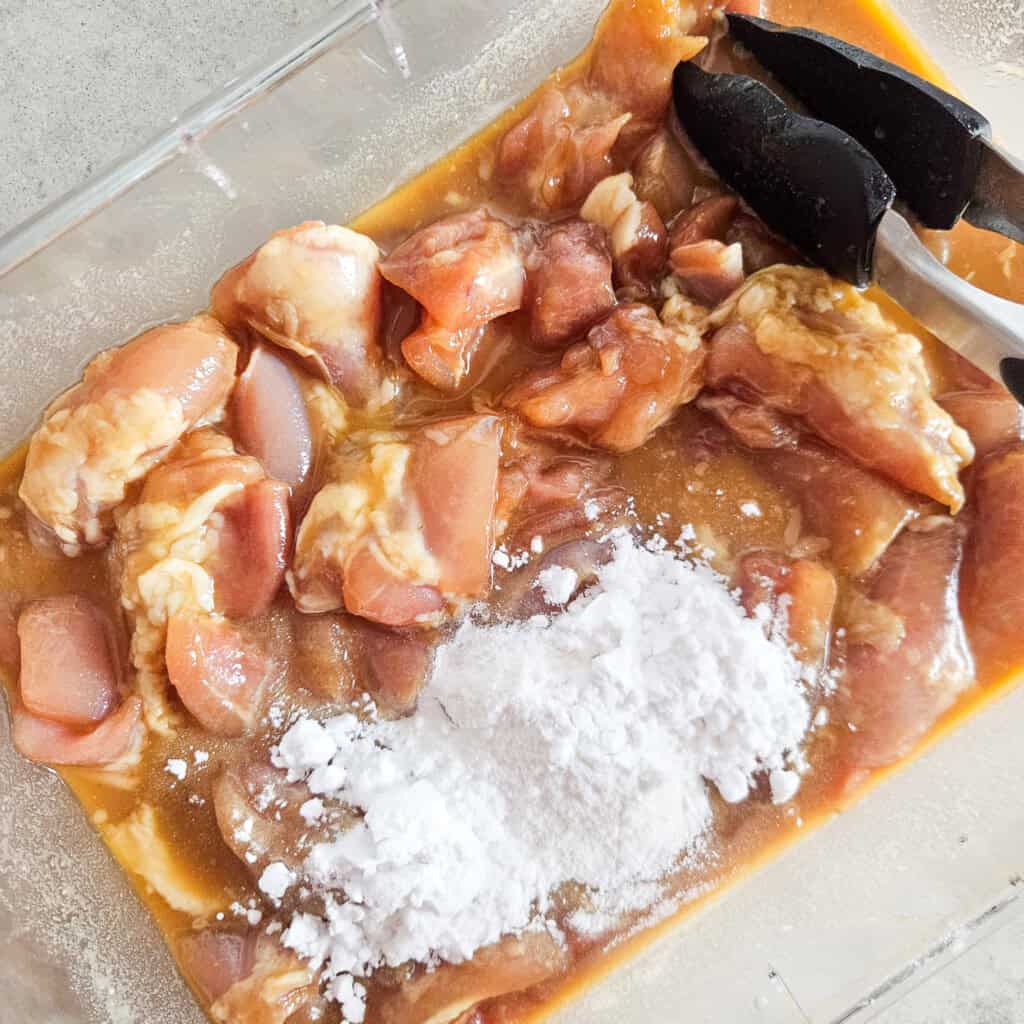
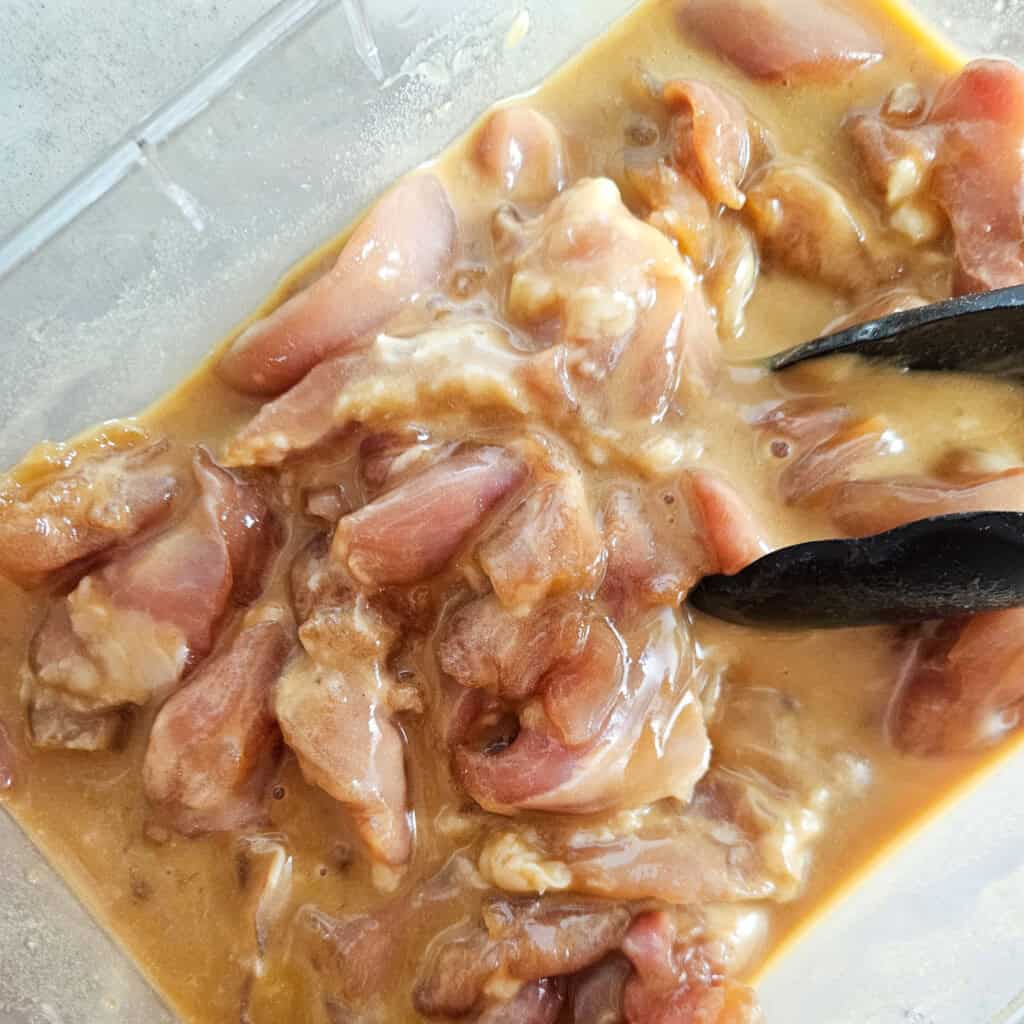
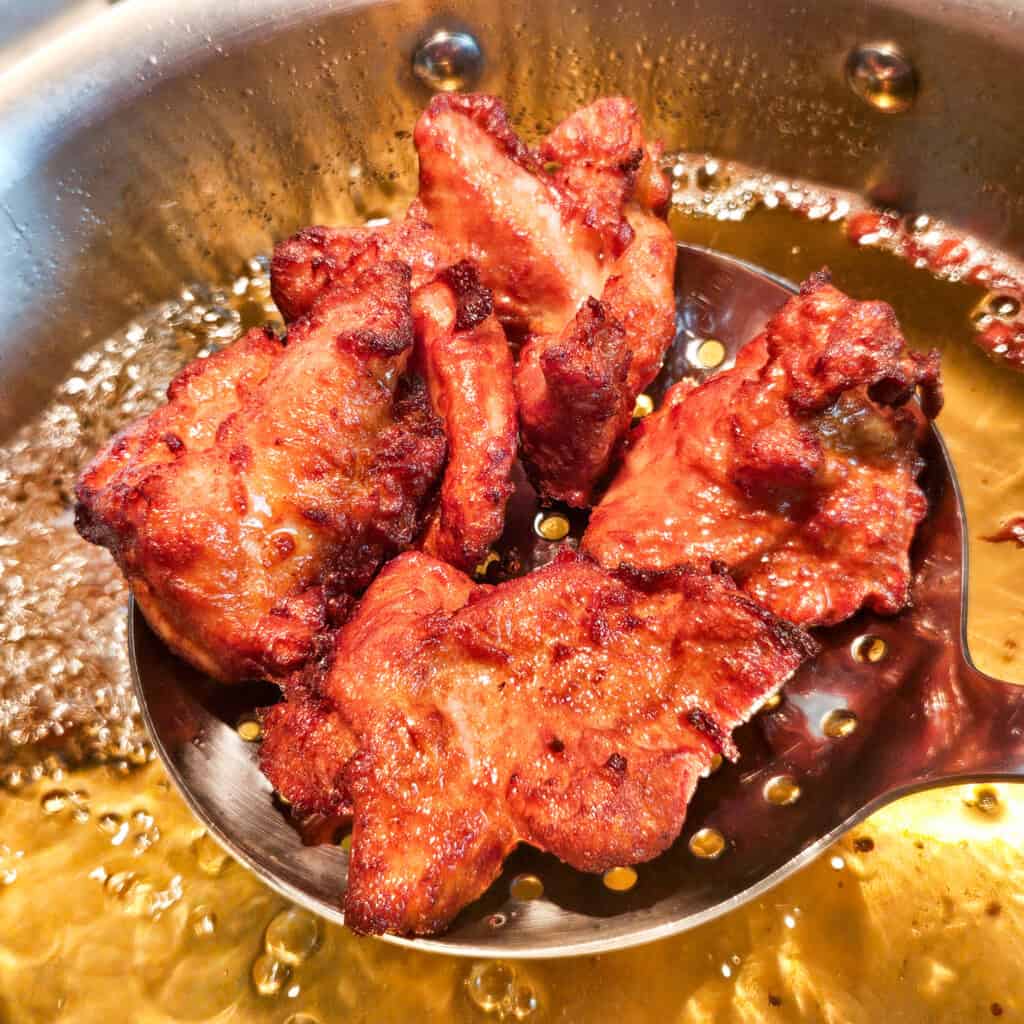
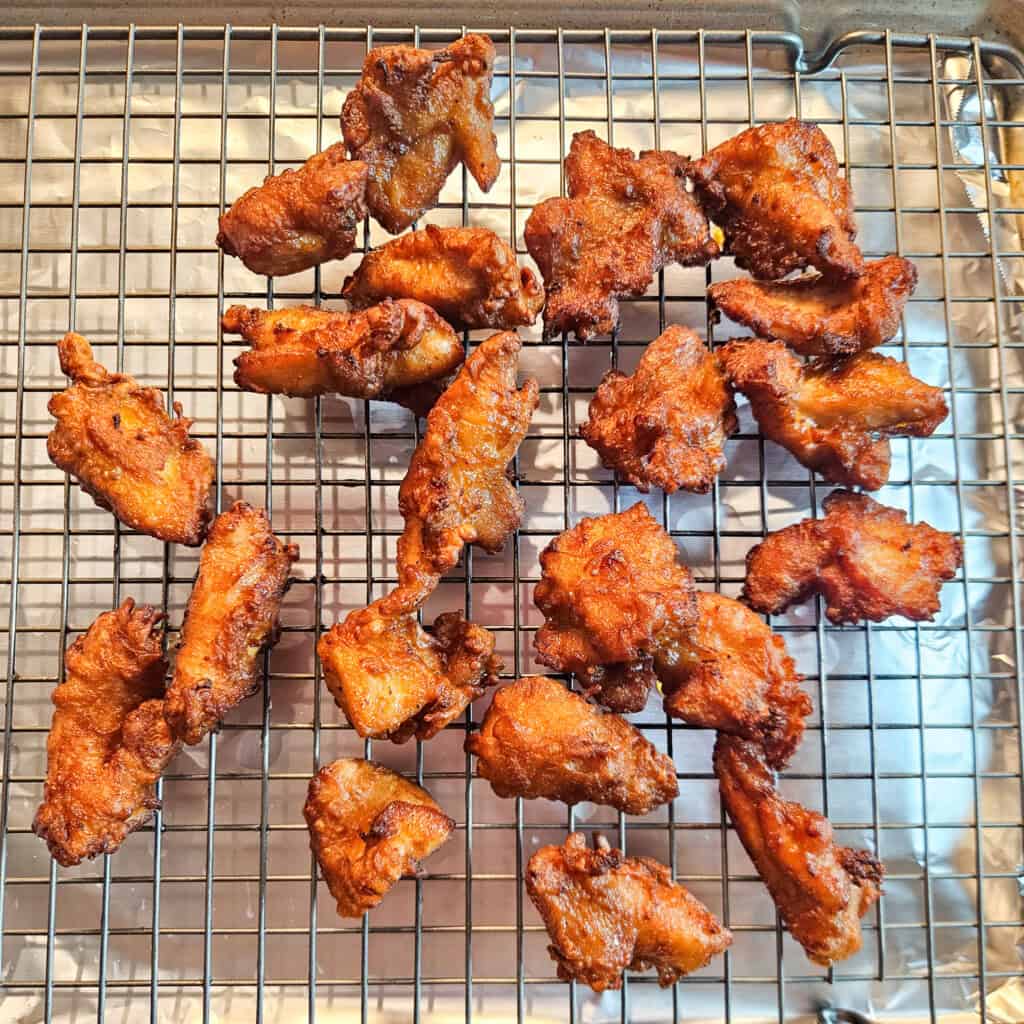
- In a shallow container, add the marinade ingredients and stir until well combined.
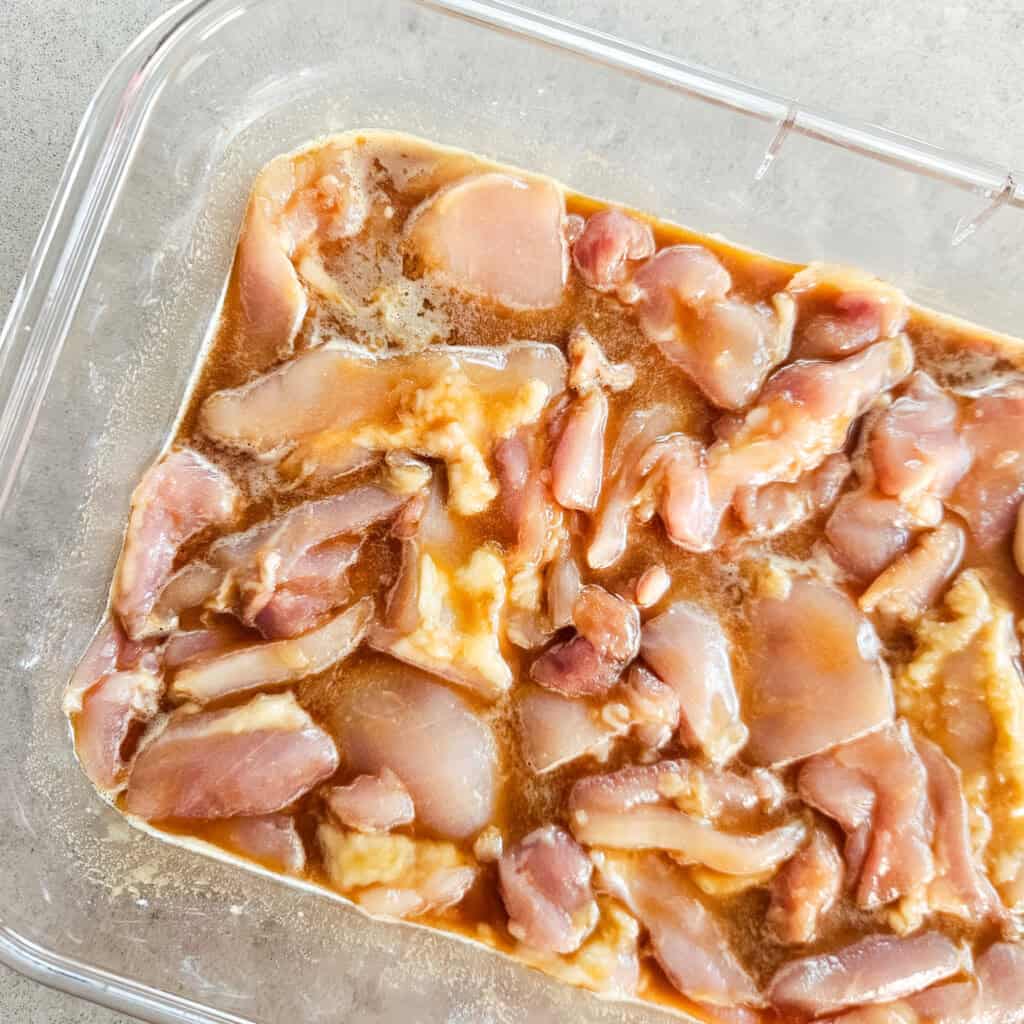
- Add the chicken pieces to the marinade and stir gently fold in to coat them.
- Marinate the chicken for 4 - 6 hours.
- Add the extra starch to the marinated chicken.
- Fry the chicken in batches.
How to Serve Mochiko Chicken
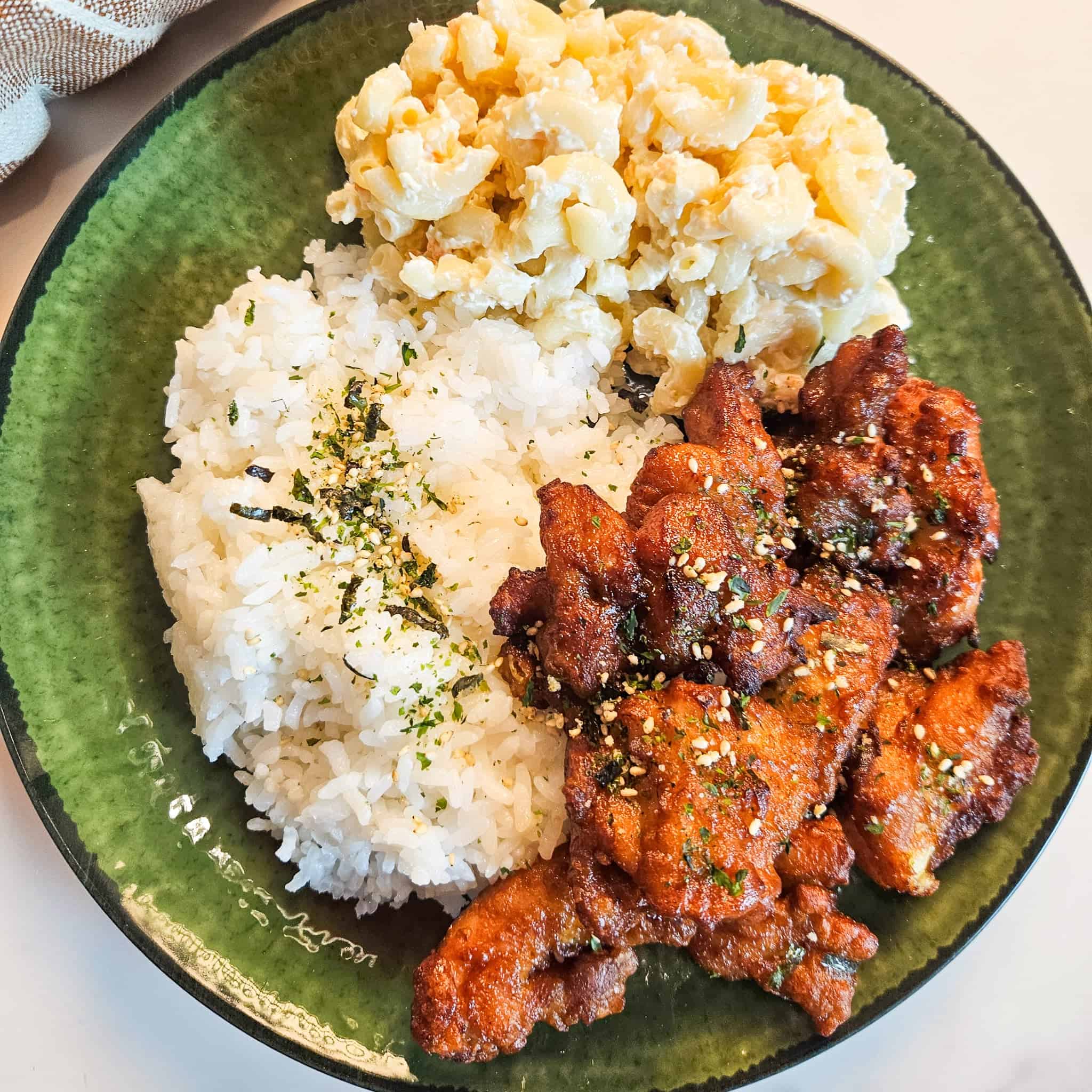
Top your finished mochiko chicken with some sprinkling of furikake and serve with white rice alongside some local-style mac salad!
FAQ
This marinating window is the perfect amount of time to hit a sweet spot of the right taste and texture. Less time doesn't let the chicken absorb enough flavors. More time than this, like 12+ hours, could cause a rubbery texture and uneven cooking because the soaked starches have broken down alot.
Potato starch and mochiko flour are dense and quickly settle to the bottom of the container. Make sure you stir the chicken in its batter every time before picking up the chicken to add to the frying pot so the starches can re-coat the chicken.
The most common type and also the entry-level type of furikake is called Nori Komi Furikake which translates to "sprinkle seasoning with seaweed." The most popular brand is Mishima and you can find it online. Lower-priced Mishima Furikake is available at the Asian aisle in Big Box grocery stores or at Asian grocery stores.
Hawaii Local-Style Mochiko Chicken Recipe (Super Crispy)

Disclosure
The equipment and ingredients sections contain affiliate links to products I love to use as well as items that I personally believe make this recipe the best version of itself.
Ingredients
- 2 lbs chicken thighs boneless and skinless, cut into bite-sized pieces
Marinade/Batter
- ¼ cup Mochiko (flour) Koda Farms brand
- ¼ cup potato starch sub: cornstarch
- ¼ cup sugar
- 2 tablespoon mirin
- ¼ cup soy sauce
- ¾ teaspoon garlic powder
- ⅛ teaspoon ginger powder
- ¼ teaspoon salt
- 2 eggs beaten
For Deep Frying
- neutral oil for deep frying
- 2 tablespoon mochiko flour
- 2 tablespoon potato starch sub: cornstarch
Instructions
Make The Marinade
- Add the mochiko flour, potato starch, sugar, mirin, soy sauce, garlic powder, ginger powder, salt, and beaten eggs to a shallow container.
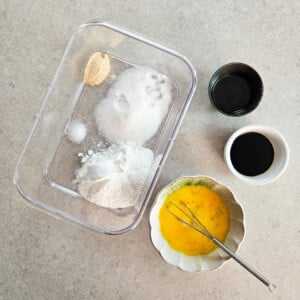
- Whisk the marinade ingredients together until smooth and there are no lumps.
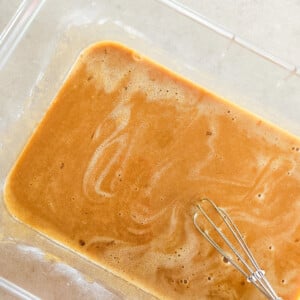
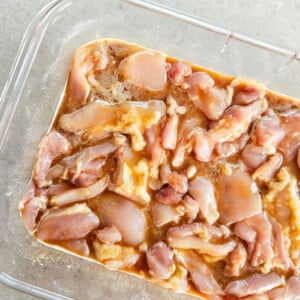
- Add the chicken pieces and gently mix them in the marinade until they are dredged. Cover and let it refrigerate for 4 - 6 hours.
Fry Chicken
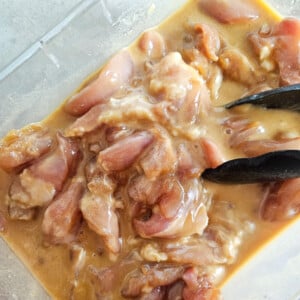
- Remove the chicken from the refrigerator and let it sit on the counter for about 15 minutes. Stir the marinated chicken gently, making sure that the starch that collected at the bottom is incorporated into the marinade again. Note: Re-stir the chicken every time just before picking them up to put in the frying pot.
- Add some neutral oil to a deep frying pan, and let it heat to 350℉ (175℃).
- Mix the extra 2 tablespoon of mochiko flour and 2 tablespoon of potato starch in the marinated chicken.
- Fry a few chicken pieces at a time, about 3-4 minutes until the chicken's inside temperature reads 165℉ (74℃).
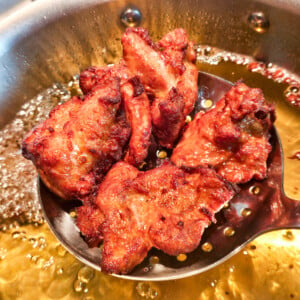
- Place the fried chicken on a rack to drain the oil.
- Serve by topping the chicken with furikake and a side of steamed white rice.
Nutrition
Have You Tried This Recipe?
Simply rate the recipe by clicking on the ⭐️s on the recipe card. Have something to say? Please leave me a comment down below telling me what you think of this recipe.
Bonus: Let me and other readers know what you did to make this recipe your own - 💫 let's inspire each other!
Also, follow me on Instagram [@third.culture.taste] and send me a DM with a picture of what you made. I would love to share and celebrate YOUR creation with our budding community 💞
Check out Third Culture Taste on Pinterest and Facebook for more delicious updates.